বিসমিল্লাহির রহমানির রাহিম।
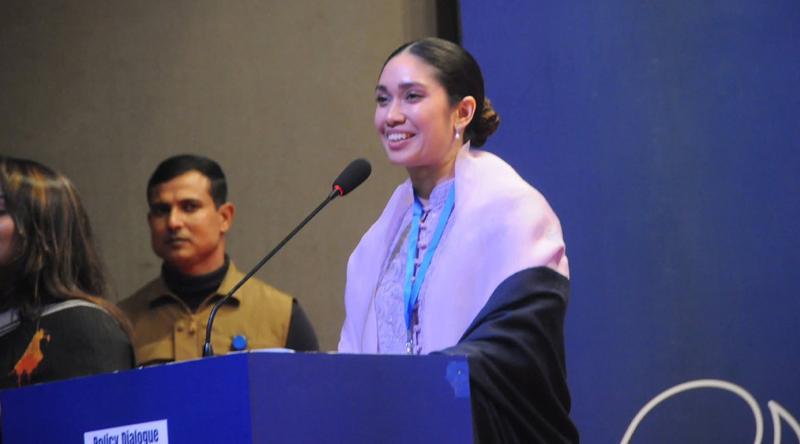
মাননীয় প্রধান অতিথি জনাব আমীর খসরু মাহমুদ চৌধুরী, সম্মানিত অতিথিবৃন্দ, আসসালামু আলাইকুম।
শুরুতেই আমি আন্তরিক ধন্যবাদ জানাই আয়োজকদের, যারা আজকের এই সুন্দর আয়োজনটি করেছেন — যেখানে আমরা সবাই আমাদের ভিন্ন-ভিন্ন মত, পথ ও অবস্থান প্রকাশের সুযোগ পাচ্ছি।
আজ আমরা যারা এখানে উপস্থিত, আমরা সবাই একরকম নই। আমাদের আদর্শ আলাদা, অভিজ্ঞতা আলাদা, দৃষ্টিভঙ্গিও আলাদা। কিন্তু তারপরও আমরা একসঙ্গে বসেছি, আলোচনা করছি। কারণ আমরা সবাই ভাবছি দেশের জন্য, দেশের মানুষের জন্য। আর এই ভিন্নতা নিয়েই একসঙ্গে কথা বলা, একে অপরকে শোনা, এটাই তো গণতন্ত্রের আসল সৌন্দর্য!
আমার আগে যেসব সম্মানিত প্যানেলিস্ট কথা বলেছেন, তাঁদের সবাইকে আন্তরিক ধন্যবাদ জানাই। নিজেদের নিজ-নিজ পেশায় অত্যন্ত সফল এই বোনদের অভিজ্ঞতা ও ভাবনা আমাকে নতুন করে অনেক কিছু ভাবতে শিখিয়েছে, অনুপ্রাণিত করেছে।
আমি আজ এখানে দাঁড়িয়েছি ভিন্ন এক অনুভূতি ও আবেগ নিয়ে। বাংলাদেশের পলিসি লেভেলে এটাই আমার প্রথম বক্তব্য। আমি এমন কেউ নই, যে সব প্রশ্নের উত্তর জানে বা সব সমস্যার সমাধান জানা আছে। তবে আমি বিশ্বাস করি, নিজের ছোট জায়গা থেকেও সমাজের জন্য, দেশের জন্য কিছু করার আন্তরিকতা আমাদের সবারই থাকা উচিত। আমি আজ এসেছি শুনতে, শিখতে এবং একসাথে কাজ করার মনোভাব নিয়ে এগিয়ে যেতে।
My earliest understanding of women’s roles in society came from my family, as it does for most us. Long before we encounter laws, policies, or institutions, our homes become our first classrooms. They teach us what is possible, what is acceptable, and what is expected.
In my home, certain things were never questioned. It was never questioned whether a woman could pursue an exemplary medical career while raising a family. It was never questioned whether a woman could build a nationwide social welfare organisation on her own merit. It was never questioned whether a woman was fit to lead, to command authority, and to earn respect in rooms full of men. And it was never questioned whether the men in our lives would stand alongside the women in their lives as equals.
My mother continued to excel professionally as a cardiologist in government hospitals, often in patriarchal settings, because she had encouragement and support at home, to balance both career and family.
In 1979, my Nanu began using her own home to open a free elementary school for vulnerable and disadvantaged children. What began as a personal act of care grew into one of the earliest NGOs in Bangladesh, creating meaningful and lasting change in young people’s lives. She did this because the men around her believed in her work, respected her leadership, and did not stand in her way.
That belief, that women’s dignity must be recognised both privately and publicly, was also reflected in my grandparents’ lives and leadership beyond our family.
My grandfather, Ziaur Rahman, understood that development was incomplete if women were excluded. He saw women as capable contributors, at home, at work, and in public life, and that belief carried into the choices he made as a leader. Under his leadership, the expansion of the garment sector meant millions of women entered formal work for the first time, gaining income and independence. The creation of the Ministry of Women’s Affairs reflected a conviction that improving the lives of women and girls required intention and structure. These were not just policy decisions, they were an extension of values he lived by personally.
That foundation was carried forward by my grandmother, Khaleda Zia, who understood the transformative power of education that gave women voice, confidence, and choice. Under her leadership, girls’ education was treated as a right rather than a privilege. Free secondary schooling, alongside programmes such as Food for Education and Cash for Education, helped keep millions of girls in school and changed the course of families across the country. Her Female Secondary School Assistance Project achieved gender parity in secondary education for the first time in our history and became a model replicated beyond Bangladesh.
She also understood that education alone was not enough if women were not supported to remain in public and economic life. Supporting women to access credit, build livelihoods, and grow small businesses mattered. So did recognising the realities of motherhood, strengthening systems around maternity leave and childcare so women would not have to choose between family and participation. For me, this legacy is about the same values I saw lived at home reflected in leadership choices.
I was privileged to grow up surrounded by exceptional women - confident, capable, and accomplished. I was equally fortunate to have male role models, including my father and my grandfather, who valued those women and never felt threatened by their strength or ambition. In fact, the four most important people in my father’s life have been women for decades, and he has treated them with deep respect and reverence, not as an exception, but as the norm. Because of this, I grew up with what I now recognise was a skewed understanding of society.
Living between Bangladesh and the UK later taught me something important: policies and access alone do not create equality. You can expand education, pass laws, and set national targets, but if social norms, daily expectations, and mindsets remain unequal, empowerment remains fragile.
This is not always about overt discrimination. Inequality often survives through habit and comfort, through what feels normal. In Bangladesh, women still perform around 85% of unpaid household and care work, spending over seven times as many hours as men on this labour each day. This work, valued at nearly 19% of our GDP, remains largely invisible in economic planning and national decision-making.
This makes something clear: gender equality is not just a women’s issue. It is an economic and national issue.
When women carry the bulk of responsibility, their participation in the formal economy suffers. Despite significant gains in girls’ education, women’s labour force participation in Bangladesh remains below 40%, compared to over 80% for men. Women are far more likely to step away from paid work after marriage or childbirth, not because they lack ability, but because systems assume they will absorb the cost.
This imbalance begins early. Girls are expected to adjust their ambitions around family needs, while boys are rarely taught that responsibility and care are shared obligations. Over time, this becomes structural, and progress stalls.
Women are already leaders. And many of those leaders are in this room today, women who have carried institutions, families, movements, and communities forward, generation after generation. Bangladesh’s progress bears your fingerprints, even when history has not always said your names out loud.
Too often, women are praised for resilience. But resilience is not empowerment when it is demanded endlessly. Too often, that resilience has come at the cost of health, rest, opportunity, and recognition, and a nation cannot keep growing if its women are constantly asked to absorb that cost.
This brings me to a central point: beliefs mean nothing without action.
To the men among us - fathers, brothers, sons, husbands, colleagues, and friends - your support for women’s rights matters. Your celebration of women’s success matters. But equality cannot survive on words alone. If systems and expectations continue to rely on women’s sacrifice as the default, inequality continues comfortably.
Fathers, in particular, have a unique role in breaking this cycle.
I am an only child, and never once was I made to feel that my parents wished for a son instead. My father once scolded someone for even asking that question. He understood that while I was treated with respect and care at home, the world outside would not always be the same. So he made sure I could navigate it with confidence.
What shaped me was not his speeches, but his consistency. Through his daily choices, he showed me what I should expect from the world.
This is how change becomes sustained. When men confront unconscious bias honestly and model respect through their action, they create space for women not just to survive, but to thrive.
In Bangladesh, the cost of inaction is visible. Girls’ dropout rates rise sharply during adolescence. Women in public life, in leadership, face harsher judgment and harassment.
Education and opportunity collapse if inequality at home and in mindset remains untouched. And for a country facing climate change, economic transition, and demographic pressure, Bangladesh cannot afford to sideline half its population through exhaustion and social expectation.
Keeping girls in school and women in public life requires collective, sustained action by women and men together. It requires men in our families, workplaces, and institutions to turn belief into practice.
When women are welcomed rather than sidelined, they do not only change their own lives. They change the future of their families, and the future of the nation.
If Bangladesh wants real progress, not symbolic success stories, but sustainable national development, then empowerment cannot stop at classrooms, offices, or policies. It must reach our homes, our institutions, and our mindsets. And it must be the responsibility of all of us.
I thank all of you for engaging in an inclusive dialogue that reflects the true spirit of progress.
Thank you.